


The difference between interior design and interior styling is that interior design builds the bones. Interior styling dresses them up. Or you can also say that design is structural, while styling is decorative.
But here’s the thing:
Most Dubai homeowners mix them up completely. They’ll ask a stylist to relocate plumbing. Or expect a designer to just “add some cushions.” It happens all the time in villas across Arabian Ranches and apartments in Downtown.
Why the confusion?
Because both transform spaces. Both make homes beautiful. The difference? Interior design rewrites the entire story, including walls, layouts, electrical systems, materials, and the whole infrastructure. It’s about how a space functions.
Meanwhile, interior styling perfects the final chapter, like furniture arrangements, textures, artwork, and those brass coffee table accessories that catch the light just right.
Working with an interior design and fit-out company in Dubai means you’re changing the foundation.
And if you’re adding custom furniture in Dubai, that’s where styling takes over. Two different games. Both essential. Let’s break down exactly what separates them, and when you actually need each one.
Interior Design: Space Planning, Technical Work & Materials
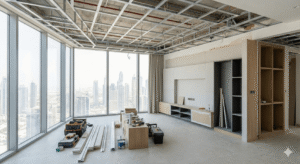
Think of interior designers as architects of lived experience. They don’t just make spaces look good. They make them work.
Here’s what interior designers actually do:
They redesign layouts from scratch. Knock down that awkward wall between your kitchen and living room? That’s them. Relocate your master bathroom to capture that Burj Khalifa view? Also them. Interior designers handle the heavy lifting. We’re talking construction drawings, structural modifications, and complete spatial reorganization.
The technical side gets serious:
- Permits with Dubai Municipality.
- Building codes.
- Fire safety regulations.
- Load-bearing wall calculations.
- MEP coordination (mechanical, electrical, plumbing, the invisible systems that make modern life possible).
An interior fit-out contractor in Dubai doesn’t just show up and start hammering. There’s engineering. There’s compliance. There’s a whole approval process.
Then comes material science:
- Designers specify everything. Which marble for your flooring won’t crack under Dubai’s heat fluctuations?
- What waterproofing system for your bathroom renovation in Dubai that’ll withstand humidity?
- Which cabinet joinery method for your kitchen renovation in Dubai that’ll survive daily use for fifteen years?
- Lighting design? That’s calculated. Lux levels for each room. Task lighting versus ambient lighting. How natural light moves through your apartment at different times of day.
- Custom joinery and built-ins. Storage solutions that maximize every centimeter.
This is where you need expert-led interior renovation services for major transformations. When you’re changing the entire look of your space, not just its appearance. Interior design solves problems you didn’t even know existed. It creates flow. It builds functionality into every square meter.
Interior Styling: Décor Layering & Visual Harmony

Interior styling is the art of the final touch. It’s what happens after the walls are painted, the floors are laid, and the electrical outlets are installed. This is where personality walks into the room.
What do interior stylists actually handle?
Furniture curation, first and foremost. That velvet sofa is just the right shade of sage green. The marble coffee table echoes your kitchen countertops. The dining chairs are comfortable enough for three-hour Friday brunches but sculptural enough to photograph beautifully. When you commission custom furniture in Dubai, you’re working in styling territory. Pieces designed to complement your space’s aesthetic, not its structure.
Then comes the layering:
- Textiles and soft furnishings.
- Cushions in varying textures: linen, velvet, bouclé.
- Throws that add warmth without overwhelming.
- Curtains that filter Dubai’s intense sunlight while maintaining privacy.
- Rugs that define zones in open-plan layouts.
- Color palettes get finessed here. Not just “blue” but “dusty Mediterranean blue with warm terracotta accents and brushed brass fixtures.” Stylists think in harmonies. In visual rhythms.
Accessories complete the story.
Artwork that reflects your travels. Ceramics from local souks. Coffee table books. Plants (real ones that’ll survive your AC). Lighting fixtures as sculptural statements. Even joinery works in Dubai, like floating shelves or decorative wall paneling, fall into styling when they’re purely aesthetic rather than functional.
Here’s the key difference:
- Styling doesn’t require permits.
- It doesn’t involve contractors or structural engineers.
- You can restyle a room in a weekend. Redesigning it takes months.
Styling makes design sing. One builds the stage. The other directs the performance. Both need each other to create spaces that don’t just function. They feel right.
When Do You Need Interior Design vs. Interior Styling?
Let’s get practical.
You need interior design when you’re changing the bones of your space.
Renovating your kitchen? That’s design territory. A kitchen renovation in Dubai means relocating gas lines, upgrading electrical capacity for modern appliances, possibly moving walls, installing new plumbing, choosing cabinet construction methods, and selecting countertop materials that withstand heat. You’re rebuilding the engine, not just repainting the car.
Converting a warehouse into an office? It is also about interior design. Warehouse office conversion in Dubai involves HVAC installations, partition walls, fire safety systems, accessibility compliance, and meeting Dubai Municipality codes. You need architects, engineers, and contractors. The full squad.
The following ones also fall under interior design:
- Adding a bathroom to your villa’s guest wing.
- Extending your balcony.
- Changing your apartment’s entire layout.
You need interior styling when the structure stays intact.
Refreshing your living room because it feels dated? That’s interior styling. New sofa, updated color scheme, better lighting fixtures, fresh artwork, and rearranged furniture. The walls don’t move. The electrical stays put. You’re working with what exists.
Want to update your bedroom’s look for the new season? Interior styling will help you out. New bedding, different curtains, repositioned furniture, and added plants.
The decision checklist:
| Question | Interior Design | Interior Styling |
| Are you moving walls or plumbing? | Yes | No |
| Do you need Dubai Municipality permits? | Yes | No |
| Is construction/demolition involved? | Yes | No |
| Changing room layout or flow? | Yes | No |
| Just updating furniture & décor? | No | Yes |
| Working with the existing structure? | No | Yes |
| Budget under AED 20,000? | Unlikely | Possible |
| Timeline under 2 weeks? | No | Possible |
Still unsure? Ask yourself: “Am I changing how the space works, or how it looks?” Function equals design. Aesthetics equal styling.
Cost, Timeline, & Project Scope Comparison
Money talks. So does time. Let’s compare what you’re actually signing up for with each service:
| Feature | Interior Design | Interior Styling |
| Average Cost (Dubai) | AED 10,000–250,000+ | AED 15,000–80,000 |
| Timeline | 3–12 months | 1–4 weeks |
| Permits Required | Yes (Dubai Municipality) | No |
| Contractors Needed | Yes (multiple trades) | Rarely |
| Scope | Structural changes, full fit-outs | Furniture, décor, soft furnishings |
| Deliverables | Technical drawings, 3D renders, Mechanical, Electrical, and Plumbing (MEP) plans | Mood boards, shopping lists, styling plan |
| Ideal For | New builds, major renovations | Refreshes, seasonal updates |
| ROI Impact | High (adds property value) | Moderate (enhances appeal) |
Budgeting guidance for Dubai projects:
- Interior design costs vary dramatically by property type.
- Redesigning your studio apartment? It would cost around AED 10,000–25,000.
- Redesigning One or two-bedroom unit? Expect to spend AED 25,000–60,000.
- That three-to-five-bedroom villa you’re eyeing? Keep a budget of AED 80,000–250,000+ in mind.
Fee structures differ, too. Some designers charge hourly (AED 200–500). Others prefer flat fees (AED 5,000–20,000 per project). Many use percentage-based pricing. 10-20% of your total project cost. Choose what aligns with your budget predictability.
Commercial interior design in the UAE operates differently. Offices, retail spaces, restaurants. These run AED 50–300 per square foot, depending on finishes, brand requirements, and functional complexity.
What drives costs up?
Project scope. Designer expertise. Material selection (Italian marble versus porcelain). Full-service project management versus consultation-only.
For businesses needing workspace transformations, our commercial renovation services combine both disciplines. Interior design handles infrastructure while interior styling creates brand-aligned aesthetics.
Styling a three-bedroom apartment? Budget AED 30,000–60,000 for quality pieces.
The bigger the structural change, the bigger the investment. Design rewrites the story. Styling polishes the prose. Choose based on what your space actually needs. Not just what sounds exciting.
How Interior Designers & Stylists Work Together
The best spaces happen when an interior designer and an interior stylist do not compete, but collaborate.
The typical workflow looks like this:
Interior designers lay the foundation.
They finalize the layout and manage the interior fit-out in Dubai
Coordinate with the interior contractor in Dubai on electrical rough-ins, plumbing installations, wall constructions, and flooring.
Once that’s locked, interior stylists enter:
- Stylists take the designer’s vision and add soul.
- They select furniture that fits the spatial plan.
- Choose textiles that complement the material palette.
- Curate accessories that enhance the lighting design.
But here’s where it gets messy:
When you hire separately, communication breaks down. Your designer specifies built-in shelving dimensions without consulting your stylist’s bookshelf vision. Your stylist orders a sofa that doesn’t fit through the doorway your designer created. Timelines clash. Budgets overlap. Nobody owns the final result.
The smarter approach?
Work with a single interior design and fit-out company, like NAK Interior, which will handle both. One team. One vision. One point of contact.
Your designer and stylist sit in the same meetings. They reference the same mood boards. The designer knows which wall will hold your statement mirror before construction starts. The stylist understands the lighting plan before ordering reflective surfaces.
No miscommunication. No finger-pointing when something doesn’t work. No coordination between three different vendors who’ve never spoken.
Integrated teams deliver cohesive results. Period. They speak the same language, work from unified timelines, and ensure your design bones and styling details actually talk to each other.
Choosing the Right Specialist in Dubai
Not all interior companies are created equal.
Here’s what to verify before signing anything:
- Licensing matters:
- Check Dubai Municipality approvals.
- Verify trade licenses.
- Legitimate firms display credentials openly.
If they dodge these things, walk away!
- Contractor capability separates amateurs from professionals:
- Can they manage the entire project?
- Do they have in-house teams or just outsource everything?
- Ask about their bespoke joinery in Dubai capabilities, like custom cabinetry, built-in wardrobes, and intricate woodwork.
- If they can’t handle joinery internally, you’re dealing with a middleman.
- Portfolio tells the real story:
- Ignore the Instagram filters.
- Ask for completed project addresses.
- Visit them on-site if possible.
- Look for work similar to your vision, including villa renovations, apartment makeovers, and commercial fit-outs.
- Variety shows versatility.
- Specialty services reveal depth:
- Do they offer custom wood furniture in Dubai?
- Can they design and manufacture?
- Or do they just source from catalogs?
At NAK Interiors, we operate as your single-source solution. Design, fit-out, joinery, styling, project management. Everything under one roof. No subcontractor juggling. No communication gaps. From initial concept to final cushion placement, we own the entire journey.
One team. One vision. Zero headaches.
That’s your turnkey advantage with NAK Interior.
Conclusion
So, let’s recall what the difference is between interior design and interior styling.
Design builds. Styling beautifies.
Design handles the structural heavy lifting. Layouts, construction, systems, functionality. It’s permits, plumbing, and load-bearing calculations. Styling perfects the visual story. Furniture, textiles, colors, those finishing touches that make a house feel like your home.
Most Dubai projects need both.
Major renovations? Start with interior design.
Quick refresh? Interior styling does the job.
Complete transformation? You need an approach integrated with both.
Don’t navigate this alone.
Working with an experienced interior design company in Dubai means you get both disciplines working in harmony. No miscommunication. No budget surprises. No compromised vision.
Ready to transform your space? Whether you’re redesigning a villa in Emirates Hills or refreshing your Downtown apartment, Nak Interiors delivers turnkey solutions from concept to completion.
Schedule your consultation today. And let’s discuss what your space actually needs. Design, styling, or the perfect blend of both.
Your dream interior starts with one conversation.
Here Are A Few More Things When Designing or Styling Your Interior Space
- Can a stylist help with renovations?
Not really. Stylists work with existing structures. They don’t handle demolition, construction, or structural changes. If your “renovation” means moving walls, relocating plumbing, or changing layouts, you need an interior designer and contractors. Stylists come in after renovation work is complete to furnish and decorate the newly transformed space. Think of it this way: stylists dress the room, designers rebuild it.
- Do interior designers handle furniture selection?
Yes, but different from stylists. Interior designers specify furniture during the planning phase, ensuring pieces fit spatially, functionally, and within the overall design concept. They focus on scale, proportion, and how furniture supports the room’s purpose. Stylists then refine those selections with attention to aesthetics, textures, and decorative details. Many interior design and fit-out companies in Dubai offer both services, creating seamless furniture solutions from custom-built pieces to curated décor.
- What if I only need décor changes?
Hire a stylist. If your walls, floors, and layout work fine but the space feels tired or outdated, styling is your answer. New furniture arrangements, updated textiles, fresh color palettes, different lighting fixtures, and added accessories. All styling territory. It’s faster (weeks versus months) and more budget-friendly than full design work. Perfect for seasonal refreshes or preparing properties for sale.
- Does styling affect property value?
Absolutely. Especially in Dubai’s competitive real estate market. Professional styling can increase perceived value by 5-15% and significantly reduce time on market. Staged homes photograph better, appeal to more buyers, and justify higher asking prices. While interior design adds functional value through quality finishes and smart layouts, styling creates an emotional connection. Buyers don’t just see potential—they see themselves living there. For investment properties in areas like Dubai Marina or Palm Jumeirah, styling isn’t optional. It’s strategic.
- Who manages Dubai Municipality approvals?
Interior designers handle this. Interior stylists don’t deal with permits. Any structural work, MEP modifications, or fit-out projects in Dubai require approvals from Dubai Municipality and sometimes additional entities like DEWA or your building management. Licensed interior contractors in Dubai navigate this process: submitting technical drawings, obtaining NOCs (No Objection Certificates), coordinating inspections, and ensuring code compliance. It’s complex, time-consuming, and legally necessary. DIY renovations without proper approvals? That’s asking for fines and mandatory reversals. Always work with licensed professionals who understand Dubai’s regulatory landscape.