


Project management is the operating system of renovation work.
It is the rigorous framework that ensures your renovation does not just look good on paper but functions perfectly in reality.
Without it, a design is just a drawing.
With it, a design becomes a livable, durable environment.
As a veteran interior design contractor in Dubai, we know that the difference between a dream home and a disaster site is not creativity. It is logistics.
Whether we are executing a complex commercial interior design in Dubai or a focused kitchen renovation in Dubai, the process remains the same: control the variables to control the outcome.

What Are You Going to Take Away Today?
The Success Equation: Planning (40%) + Procurement (30%) + Execution (30%) = Handover
- The Bottleneck: Approvals (Dubai Municipality/DCD) determine your start date, not us.
- The Risk: ordering materials after demolition starts. Always procure early.
- The Reality: A “perfect” site doesn’t exist. Management is about solving the daily surprises quickly.
Phase 1: Discovery & Concept Development
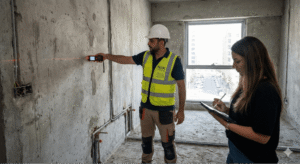
Discovery is the forensic analysis of your space and your needs before a single line is drawn.
It is where we define the technical constraints of the site.
An interior design project manager does not start with colours; we start with measurements.
In this phase, the interior design project manager aligns your vision with the structural reality of the property.
If you want a kitchen island, we first check if the plumbing gradient allows for a waste pipe in the middle of the floor.
Key Activities:
- Site Survey: Laser scanning the existing shell to identify uneven floors or load-bearing columns.
- MEP Assessment: Checking the age and load capacity of the electrical distribution board.
- Feasibility Study: Can we actually remove that wall? (Requires structural engineer review).
For interior renovation services, this phase prevents expensive changes later.
At NAK Interior, we act as the consultant, analyzing the spatial limits to determine the feasible design.
Phase 2: Design Documentation & Approvals
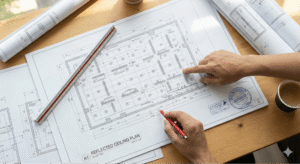
Design Documentation is the creation of the technical “instruction manual” for the construction team.
It translates 3D renders into 2D engineering drawings that a mason can read.
This is the most critical phase for compliance in the UAE.
A drawing is useless if the authorities reject it.
An interior design project manager produces detailed sets for:
- Reflected Ceiling Plans (RCP): Exact locations of lights and AC grilles.
- Power & Data Layouts: Preventing the “trailing cable” mess in offices.
- Joinery Drawings: Millimetre-perfect specs for carpenters.
The Approval Maze: In Dubai, you cannot simply start drilling. We handle the bureaucracy:
- Developer NOC: (Emaar, Nakheel, etc.)
- Dubai Municipality / Trakhees: Layout approval.
- Civil Defense (DCD): Fire safety compliance (critical for commercial interior design in Dubai).
Phase 3: Procurement & Scheduling
Procurement is the strategic sourcing and purchasing of materials to ensure they arrive exactly when needed.
It is supply chain management applied to your living room.
If the tiles arrive two days late, the tiler sits idle, and the project slides.
We utilize a “Just-in-Time” (JIT) delivery protocol to manage limited site storage.
What is Just-in-Time?
It is a logistics strategy where materials arrive on site only hours before they are needed, rather than weeks in advance.
Why do we use Just-in-Time?
Because a standard apartment in Dubai has zero “warehouse space.”
If we dump 50 boxes of porcelain tiles in your living room while demolition is still happening, the workers have nowhere to stand. By using JIT, we ensure the tiles arrive on the exact morning the tiler starts. Keeping the site safe and clear.
The Procurement Schedule:
| Material Category | Typical Lead Time | Action Required |
| Custom Joinery | 4–6 Weeks | Finalize laminate/veneer selection early. |
| Imported Sanitary Ware | 8–12 Weeks | Order during Design Phase 1. |
| Local Glass/Mirrors | 1–2 Weeks | Measure only after tiling is complete. |
| Kitchen Appliances | 1 Week | Specs needed immediately for cabinet sizing. |
For a kitchen renovation in Dubai, ordering the appliances is the first step, not the last, because the joinery is built around the fridge and oven.
Phase 4: Construction & Site Supervision
Site Supervision is the daily quality control and coordination of tradespeople to ensure the design is executed accurately.
It is where the interior design contractor in Dubai earns their keep.
We act as the conductor of a noisy orchestra.
We ensure the electrician doesn’t chase a wall that the painter just finished.
Core Responsibilities:
- MEP First: We test pressure in pipes before closing the walls (pressure test).
- Level Checks: Ensuring floor screeds are perfectly level for joinery installation.
- Conflict Resolution: Solving “site clashes” (e.g., an AC duct blocking a light fixture).
Quality is not an accident; it is inspected. Interior design project managers use a “Hold Point” system: Work cannot proceed to the next layer until the current layer is approved.
Phase 5: Handover & Snagging
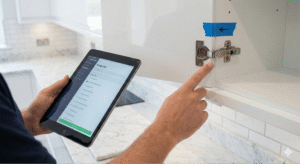
Snagging is the process of inspecting the finished project to identify and rectify minor defects before final sign-off.
It is the final polish.
A project is not “done” when the workers leave; it is done when the “Snag List” is empty.
The Handover Protocol:
- Technical Clean: Removal of all construction dust and protective films.
- The Walkthrough: We walk the site with you, marking any paint chips, stiff hinges, or grout gaps.
- Rectification: Our team fixes these items (usually within 5-7 days).
- Documentation: We hand over the “O&M Manual” (Operations & Maintenance), including warranty certificates for waterproofing and appliances.
Expert Tips for a Smooth Process
After successfully completing over 300 fit-out projects across the UAE. From Jumeirah villas to Business Bay offices, and beyond. Our interior design engineers have analyzed exactly where projects go wrong.
We didn’t just Google these tips; we learned them the hard way, so you don’t have to.
Critical Path Method (CPM) is a project management technique that identifies the sequence of crucial steps that determine the project’s duration. We use this to keep your delivery date sacred.
To keep your sanity, follow these field-tested protocols:
Freeze the Design:
Once the hammer hits the wall, stop looking at Pinterest. The number one cause of budget overrun is “scope creep.” Changes made during construction (Variation Orders) require re-approvals and material re-ordering, which kills timelines.
Define “Working Hours”:
Dubai is strict on noise. In residential towers (like JBR or Marina), noisy work is often legally restricted to 10:00 AM – 5:00 PM. We plan our heavy demolition strictly around these windows to avoid fines from Building Management.
Demand Weekly Updates:
Do not rely on “it’s going well.” Demand a Weekly Progress Report from your contractor. It must include site photos, milestones achieved (e.g., “Waterproofing Passed”), and a flag for any upcoming risks.
Especially in commercial interior design in Dubai, every day of delay is lost revenue. Structured communication prevents this.
Conclusion
The interior design project management process is not glamorous.
It is dusty, loud, and complex.
But it is the only way to deliver high-quality results predictably.
You don’t need a designer who just makes things pretty; you need a partner who manages the chaos.
Professional management means fewer delays, controlled budgets, and a finish that lasts.
Ready to start your project with a plan, not a guess?
Contact the leading interior design contractor in Dubai for a consultation.
The Engineer’s FAQ: Real Questions from 300+ Clients
We know that renovating in Dubai comes with unique anxieties. From DEWA approvals to hidden costs. Over the last decade, we have answered these exact questions hundreds of times.
Here is the truth, without the sales fluff.
Do I need to move out during the renovation?
For a full fit-out, yes. It is not just about noise; it is about health. Demolition creates fine dust, and we often need to shut off water and AC for days at a time. We strongly recommend a short-term rental for the first 3–4 weeks to avoid the stress and health risks.
Can I visit the site during construction?
Yes, but for your safety, we schedule “Milestone Visits.” A construction site is a hazardous zone with exposed wires and uneven floors. We prefer to bring you in at critical checkpoints, like “Post-Tiling” or “Pre-Joinery,” so we can discuss the quality of the finish rather than just dodging debris.
Who manages the government approvals?
We do. We act as your technical representative. Our team prepares the CAD drawings and submits them directly to Dubai Municipality, Civil Defense (DCD), and Trakhees. We also handle the building management (BMS) permits. You only need to provide your Title Deed and passport copies; we handle the red tape.
Who pays the permit fees?
We handle the application process, but the fees are billed to you at cost. We believe in transparency, so we share the official receipts from Dubai Municipality or the Developer. We do not add a “service markup” on government or developer charges.
What is the number one cause of delays?
Indecision on materials. Construction is a supply chain game. If you take 3 weeks to select a floor tile, the material might go out of stock, causing a 6-week delay. To prevent this, we provide a “Material Selection Schedule” at the start. Stick to the dates, and we stick to the handover.
When is the budget finalized?
The budget is locked the moment you sign the Bill of Quantities (BOQ). That is our contract. However, if you change the scope during the project. For example, deciding to add a walk-in wardrobe halfway through. This creates a Variation Order (VO). VOs are the only thing that changes the final price.
How do you handle “hidden” problems?
Demolition often reveals secrets, especially in older Dubai buildings (like leaks behind walls or poor wiring). If we find an “Unforeseen Condition,” we stop, photograph the issue, and send you a Technical Site Report with a cost for rectification. We never fix extra items without your written approval first.
What is your payment structure?
We never ask for 100% upfront. Our standard is milestone-based: 50% upon signing (to procure materials), 40% during execution (e.g., post-tiling), and 10% strictly upon successful handover. This structure keeps us accountable and ensures we are motivated to finish on time.
What happens if something breaks after you leave?
You are covered by our 12-Month Defect Liability Period (DLP). If a water heater leaks or a cabinet hinge sags within a year, we return and fix it for free. We also hand over the manufacturer’s warranties for all installed appliances and MEP equipment.
Are you insured against accidents?
Absolutely. We hold “Contractor All Risk” insurance. This protects your property and your neighbour’s property from accidental damage during the works. In high-rise towers, this is often a mandatory requirement from Building Management to protect elevators and common areas.